AI Research & Science
Anthropic Science: Can AI Compress Decades of Scientific Discovery Into Years?
Anthropic’s new science blog explores AI-assisted discovery, research workflows, scientific reliability and the economics of accelerating science.
By Aidan McKnight · Insights
Automate
Book a call →

How this helps: Understand the potential and limitations of applying AI to scientific research without confusing promising demonstrations with proven breakthroughs.
TL;DR — Key takeaways
Anthropic launched its Science Blog on March 23, 2026, with features, practical workflows and field notes about AI in research.
It ties the effort to Dario Amodei’s idea of a “compressed 21st century,” in which decades of scientific progress could happen in a few years.
The launch is candid about limits: AI speeds parts of research, but humans still design, verify and take responsibility for results.
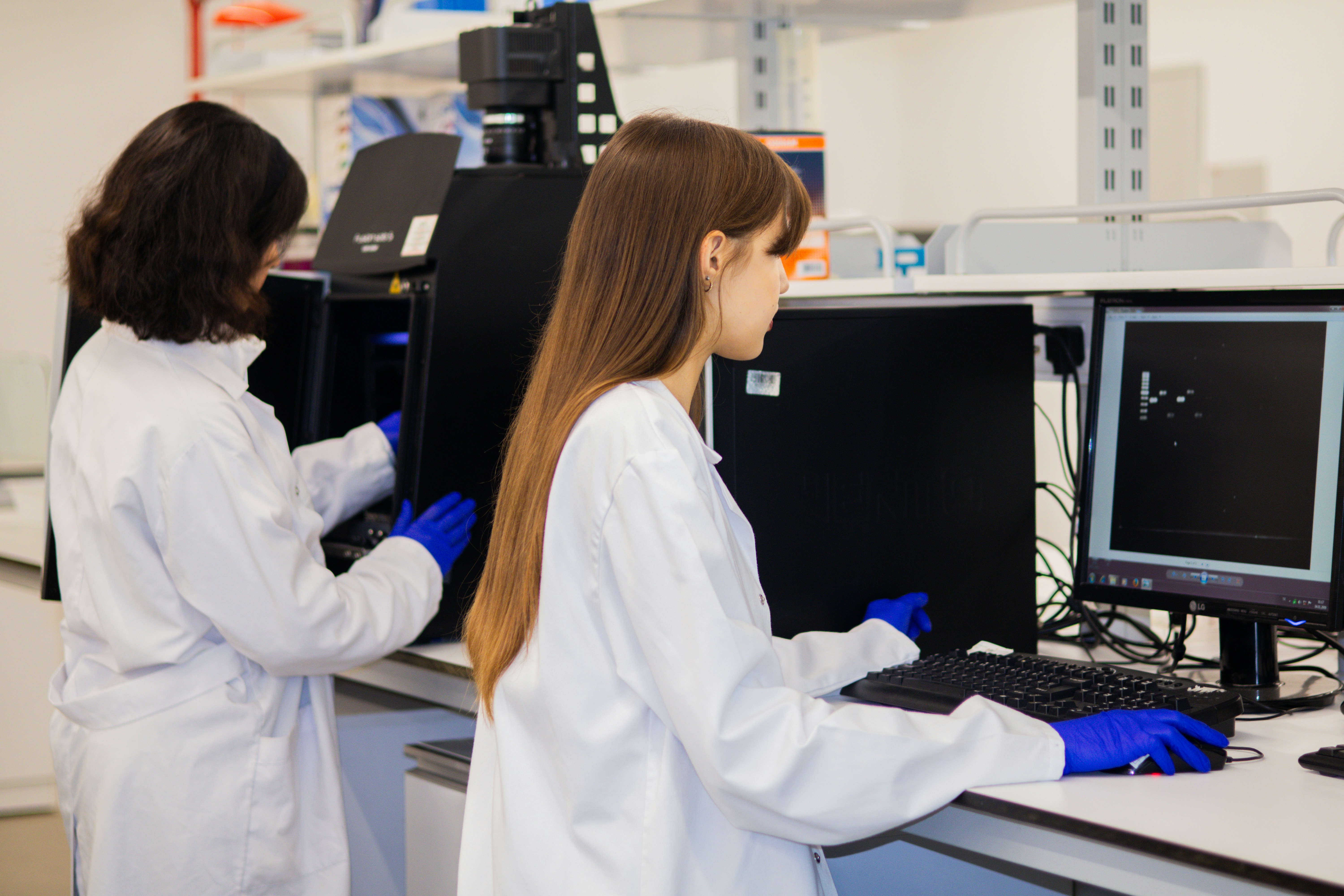
In March 2026, Anthropic launched a science blog with a question that reaches far beyond chatbots: what happens when artificial intelligence becomes part of the process of scientific discovery itself? The announcement describes a future in which models help researchers reason, analyze data and tackle technical work that previously required much larger teams. It also makes an unusually important admission: today’s AI systems can be highly capable in one part of a scientific workflow and unreliable in another.
A new publication about AI and science
Anthropic’s “Introducing our Science Blog,” published March 23, 2026, announced three editorial formats: features examining research results and AI’s contribution to them; workflows explaining how scientists can use AI; and field notes surveying discoveries, tools and open questions. The company said it would cover work by its own researchers as well as external collaborators and the wider scientific community. The distinction matters because credible scientific communication must explain methods and limitations, not merely celebrate a product.
What is the compressed 21st century?
Anthropic connects its science initiative to CEO Dario Amodei’s vision of a “compressed 21st century,” in which scientific progress that might otherwise take decades could unfold over a few years. This is an ambition, not an established forecast. Faster literature review, code generation, statistical analysis and experimental planning may shorten some research cycles, but physical experiments, clinical trials, validation and institutional adoption still impose real constraints.
AI is moving from calculation toward cognitive work
Computers have long accelerated science by processing data and simulating physical systems. Newer AI models can also assist with tasks closer to scientific reasoning: proposing approaches, interpreting technical literature, writing analysis code and exploring hypotheses. Anthropic points to examples involving mathematical proofs, computational analyses and biological data. The key question is not whether a model can produce a plausible scientific explanation, but whether its contribution survives independent testing.
Why scientists still need to supervise the model
The launch post explicitly warns that AI systems can hallucinate, become overly agreeable and fail on problems a specialist finds straightforward. Those weaknesses are especially consequential in research, where an elegant but false result can contaminate later work. Reproducible code, documented assumptions, independent review and empirical validation remain essential. The more capable an assistant becomes, the more important it is to distinguish generating a candidate result from establishing that the result is correct. For a practical check, give an analyst the same published dataset, units and inclusion criteria. Ask them to reproduce one figure independently and record which preprocessing decisions explain any difference. This is a suggested review procedure.

Illustrated concept — A scientific AI loop still needs verification. This summarizes the article; no outcome estimates or independently measured values.
From individual researcher to research orchestrator
Anthropic asks what scientific apprenticeship and institutional practice should look like when AI changes the division of labor. A researcher may spend less time executing routine analyses and more time designing questions, supervising automated work, checking outputs and deciding which results deserve scarce laboratory resources. That could broaden participation, but it could also create new demands for verification skills and domain expertise. Scientific judgment does not disappear when the cost of producing candidate answers falls.
What Anthropic is building around science
The company identifies several initiatives: AI for Science, which provides API credits to researchers; Claude for Life Sciences, oriented toward research and development workflows; and participation in the US Genesis Mission, a broader science-and-AI initiative. These programs represent different approaches to adoption, from subsidized access to specialized enterprise workflows and partnerships. Their existence does not, by itself, prove measurable gains in scientific productivity.
The commercial opportunity and its limits
If AI reduces the time required for some research tasks, its value may extend beyond model subscriptions. Research organizations could use it to improve throughput, make specialist analysis more accessible or coordinate complex computational workflows. However, the business case depends on verified productivity gains, data security, reproducibility, integration costs and the consequences of errors. In high-stakes science, an inexpensive wrong answer can be much more costly than a slow correct one.
The publication itself is part of the strategy
A dedicated science blog can serve several functions at once: attract research collaborators, document successful use cases, educate potential customers and shape public expectations about what AI can accomplish. That does not invalidate the research it features, but it is useful to distinguish independent scientific evidence from a company’s own account of its capabilities. Readers should ask what was independently replicated, what human experts contributed and what benchmarks or experiments support each claim.
The real measure of AI-driven discovery
The most important metric will not be the number of papers, demonstrations or AI-generated hypotheses. It will be the number of reliable insights that withstand scrutiny and lead to meaningful scientific progress. Anthropic’s announcement is a useful snapshot of a transitional moment: AI is becoming a research collaborator, but scientific credibility still depends on the quality of the evidence.
How to interpret the evidence and recommendations
Evidence: Dates, company disclosures, numerical claims and quotations must be understood in the context of the cited original filing, study or announcement and its publication date.
Interpretation: Comparisons and implications are the author’s judgment. Forecasts and company claims are not independently verified future results.
Recommended next step: Inspect the original source and any later amendments, define the metric and test the business implication before acting.
Sources
Related work
Explore related research in /blog and the original financial documentary in /theater . For AI production cost assumptions, see /aidanai/agentic-gtm-cost-planner .
Book a call
Bring the research question, a public dataset and one result you want to reproduce.
Keep reading
Related articles

Automate
The Eleven Album: How ElevenLabs Is Bringing AI Music Into the Recording Industry
Read article →

Automate
Lovable’s First Year: $200 Million ARR and the Rise of the AI Software Builder
Read article →

Automate
Claude Code Is the Inflection Point: Why AI Agents Threaten the Traditional Software Business
Read article →
Want help putting this into practice?
Discuss your next practical step in a short conversation.
Book a Call ↗
