Research
Luxury Packaging Market Research
Research luxury packaging through brand experience and supply-chain economics.
By Aidan McKnight · Insights
Establish
Book a call →

How this helps: A practical framework for researching luxury packaging options, weighing brand experience against materials, minimum order quantities, lead times, cost and new sustainability rules.
TL;DR — Key takeaways
Luxury packaging is part of the product: it signals quality at unboxing, in store and in photos customers share.
Research should compare design language, materials and finishes, production methods, suppliers, minimum order quantities (MOQs), lead times and unit cost together.
Sustainability is now a regulatory issue, not just a preference: the EU’s Packaging and Packaging Waste Regulation (PPWR), Regulation (EU) 2025/40, applies from August 2026 and phases in recyclability and minimization requirements.
Separate what you observed (prices, specs, quotes) from what you inferred (positioning, likely costs) in any report.
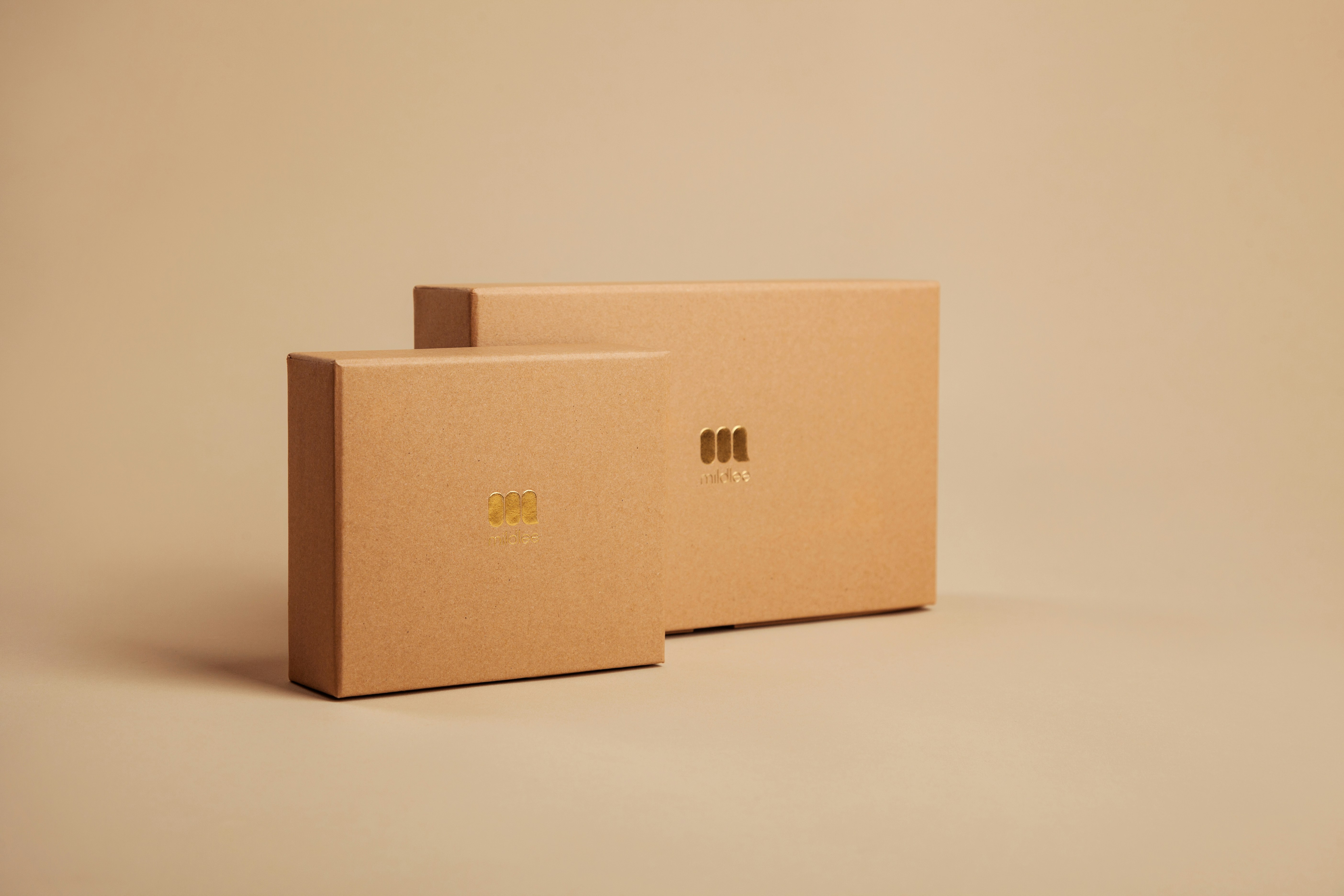
What to research
Brand experience
How competitors and aspirational brands open, reveal and present products.
Colors, textures, typography, closures, inserts and tissue.
How packaging photographs for e-commerce and social.
Gift-readiness and reuse potential.
Materials and finishes
Rigid board, folding carton, molded pulp, wood, metal, glass.
Finishes: foil, embossing, debossing, soft-touch, spot UV.
Recyclability and recycled content.
Certifications such as FSC for paper and board.
Production economics
MOQs: the minimum run a supplier will produce. Higher MOQs cut unit cost but tie up cash and storage, and make design changes costly.
Lead times: sampling, production and shipping, often several weeks to months for custom rigid packaging.
Unit cost: at different volumes, including inserts, printing and assembly.
Freight and storage: rigid boxes ship and store as air unless collapsible.
Suppliers
Location, capabilities, quality control, compliance documentation, communication and track record with comparable brands.
Sustainability and regulation
The PPWR sets EU-wide rules on packaging design, recyclability, recycled content, minimization (limiting empty space and unnecessary layers) and labeling, with obligations phasing in over several years from 2026. Brands selling in the EU should check which requirements apply to their packaging and when. Several U.S. states, including California, Colorado, Maine, Minnesota and Oregon, have passed extended producer responsibility (EPR) laws for packaging. Refillable and lighter-weight designs are gaining attention partly for these reasons.
How to structure the research
Define the brief: product, price point, channels, brand values, budget, volumes.
Benchmark 10–20 competitors and adjacent luxury categories with photos and notes.
Shortlist materials and formats that fit the brief.
Request quotes and samples from three to five suppliers at two or three volume levels.
Compare in a matrix: experience, cost, MOQ, lead time, sustainability, risk.
Recommend with clear trade-offs and next steps.
Illustrative example
A new fragrance brand wanted a rigid magnetic box with foil. Research showed competitors moving toward refillable bottles and simpler outer packaging. Quotes revealed the rigid box’s MOQ would tie up several months of cash at launch volumes. The team chose a high-quality folding carton with embossing and a reusable pouch for the first run, with rigid packaging planned for a later gift edition.
Common mistakes
Choosing designs before checking MOQs and lead times.
Comparing unit prices at different volumes.
Ignoring freight and storage.
Not checking EU and state packaging rules for target markets.
What to do this week
Write a one-page packaging brief.
Photograph and catalogue competitor packaging.
List target markets and check packaging regulations.
Request quotes at two volume levels from three suppliers.
A comparison matrix
Build one row per option and score each column:

Illustrated framework — Evaluate packaging as a commercial system. Original summary based on the steps in this guide; not empirical data.
Format and materials (for example, rigid magnetic box, FSC board, foil logo)
Brand experience score (1–5, from internal review or customer testing)
Unit cost at volume A and volume B
MOQ and cash tied up at MOQ
Sampling and production lead time
Freight and storage impact
Recyclability and regulatory fit for target markets
Supplier risk (single source, location, quality history)
Weight the columns by what matters most for the launch. A brand launching with uncertain demand might weight MOQ and cash heavily; an established brand doing a holiday edition might weight experience and lead time.
Frequently asked questions
How many samples should we order?
At least two or three finalists, in the real materials and finishes. Photograph them as customers would and test them in shipping.
Do sustainability claims need evidence?
Yes. Environmental marketing claims are regulated, for example by the FTC’s Green Guides in the U.S. and EU rules on green claims. Keep documentation for any claim you make.
How to interpret the evidence and recommendations
Evidence: Dates, company disclosures, numerical claims and quotations must be understood in the context of the cited original filing, study or announcement and its publication date.
Interpretation: Comparisons and implications are the author’s judgment. Forecasts and company claims are not independently verified future results.
Recommended next step: Inspect the original source and any later amendments, define the metric and test the business implication before acting.
Sources
Related reading
Explore related work
See interactive planning tools at Aidan AI tools and selected projects in the work portfolio.
Book a call
Need packaging research for a launch or redesign? Book a 30-minute call.
Keep reading
Related articles


Want help putting this into practice?
Discuss your next practical step in a short conversation.
Book a Call ↗
