Videography & Commercial Production
Professional Videography for Established Businesses: A Reusable Asset, Not Just a Promotional Video
How a professionally planned filming engagement can document operations, explain technical value, support recruiting and create a reusable visual asset library.
By Aidan McKnight · Insights
Establish
Book a call →

How this helps: Understand when original business video is worth commissioning and how to turn a filming day into assets that support more than one marketing channel.
TL;DR — Key takeaways
Define the audience, message and commercial use before booking a camera crew.
Capture real work, experts and proof with permissions and safety constraints.
Deliver reusable masters, short cuts, stills and source metadata—not only a single hero video.
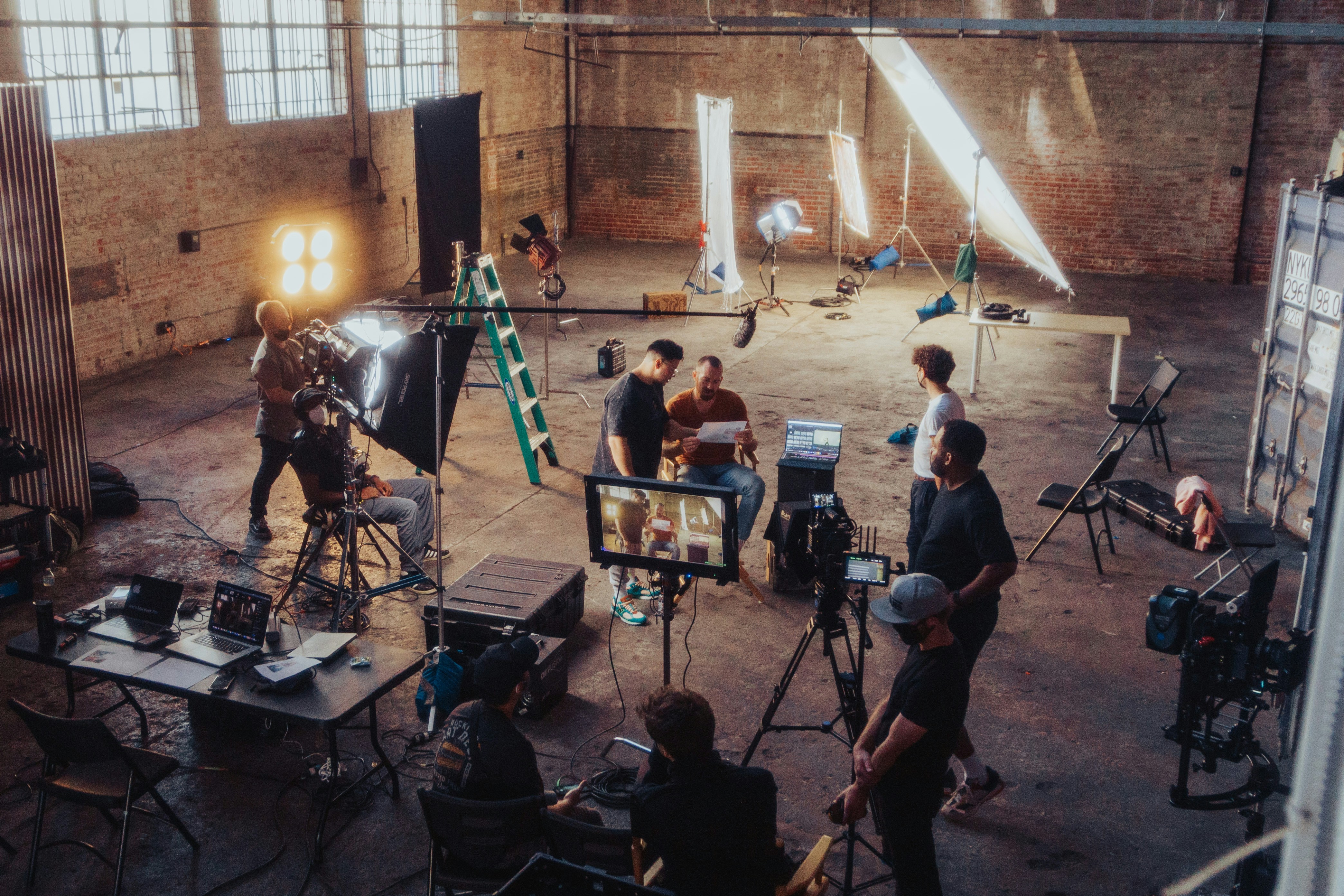
A company can spend heavily on a beautiful brand film that nobody in sales, recruiting or customer support can use. Professional videography becomes more valuable when each shot and interview is planned around a specific information need and the resulting materials remain usable after the campaign ends.

Figure: Original editorial illustration for BUSINESS VIDEOGRAPHY showing camera visual motif in sage, cream and gold. Original editorial visual; a conceptual illustration, not a measured finding.
Why original footage can be a competitive asset
Original footage can demonstrate something a generic stock photograph cannot: actual equipment, real staff, facilities, workflows and the conditions under which customers receive a service. For industrial or established businesses it can reduce uncertainty about scale, expertise or process. It should never be staged to imply capabilities or customers that are not real.
Six use cases beyond the homepage
Consider a concise capability film; employee or owner interviews; product demonstrations; process or facility walkthroughs; recruiting and training films; and short clips to answer frequently asked buyer questions. Some productions also support investor, vendor and internal communications when disclosure and permissions allow.

Visual summary — four topics from this guide. Original conceptual illustration, not numerical evidence.

Figure: Exhibit 1 · Planning for an audience makes a commercial film more useful. Original editorial visual; a conceptual illustration, not a measured finding.
Preproduction determines whether the shoot is economical
Start with a brief specifying the intended viewer, desired action, production locations, access requirements, safety concerns, spokesperson, message hierarchy, shot list, interview questions, formats and review owners. If the content must support both 16:9 and 9:16, plan framing and camera coverage accordingly rather than assuming every wide image can crop cleanly.
Production quality is more than the camera model
Legible audio, useful lighting, location control, clear framing, subject coaching, relevant B-roll and permissioned access matter. Professional production also includes insurance and safety planning where appropriate, releases, backups and an organized ingest workflow. A more expensive camera does not solve weak narrative or inaccessible subject matter.

Figure: Exhibit 2 · Original production footage supports multiple commercial teams. Original editorial visual; a conceptual illustration, not a measured finding.
Build a multi-format deliverable set
Specify one approved master, several audience-specific edits where justified, vertical clips, usable still frames, captions, transcripts, titles and thumbnails, a rights and release log, and source-file retention terms. A two-minute overview and a technician’s long technical demonstration serve different jobs; both may come from the same capture session.
How to evaluate return without inventing numbers
Define which sales or support questions the film should answer. Track watch time and audience retention where available, reuse by sales staff, qualified inquiries citing the content, recruiting applications and the costs of future reshoots avoided. A video is not automatically profitable because it receives impressions.

Figure: Exhibit 3 · Production economics include planning, filming and finishing. Original editorial visual; a conceptual illustration, not a measured finding.
What a professional project engagement includes
Discovery, creative treatment, production plan and shot list, site coordination, filming, edit review, color and audio finishing, captions, aspect-ratio versions, publication assistance if scoped and an asset handoff with agreed licensing. The work should remain useful even if the company changes social media agencies.
Which business questions warrant professional filming
A production brief should begin with who will watch, what they currently misunderstand and what they must be able to do afterward. An industrial buyer may need to evaluate a machine’s actual dimensions; a job candidate may need to see the work environment; a prospective customer may want to meet the person who will deliver the service. These are different videos with different evidence requirements. List the exact questions, expected viewing environment, permitted claims and next action before drafting a script. The person commissioning the work should be able to explain why the footage cannot be replaced adequately by an existing photograph or a short written page.
A preproduction discovery workshop
Bring together the owner or sponsor, someone from sales, a subject-matter specialist and the people who control location access. Agree on audience, messages, topics excluded from filming, available proof, approval rights, budget and deliverable formats. Walk through existing brand materials and customer-facing questions. Ask which projects, employees and facilities can genuinely be shown. Review current website and sales materials so the film fills a gap rather than duplicating something already useful. A written treatment should describe the proposed structure and its commercial purpose before cameras, locations or equipment are booked.
A practical shot list for industrial or service work
Plan an establishing shot that situates the business, a handful of process details that clarify actual capability, product or machinery demonstrations that need technical confirmation, and short interviews that give the work a human explanation. Include cutaways, signage, natural sound and context useful to editors. Identify every hazard, restricted area, customer property and person requiring permission. A crew should not interrupt critical operations to obtain a dramatic angle. If a necessary process cannot be filmed safely, agree on an accurate schematic or approved alternate demonstration rather than staging misleading footage.
Interviewing people who are not professional presenters
An engineer, founder or technician may know the material deeply but feel uncomfortable on camera. Prepare a short topic list instead of demanding memorized language. Ask them to answer one question at a time, request real examples and let them correct technical terminology. The interviewer can repeat a question to produce a clean standalone answer, then confirm that the edited statement preserves conditions and caveats. Provide breaks and maintain a respectful set. Effective production is not about making every employee look like a television personality; it is about making their actual knowledge understandable.
Scope the edit, then choose the equipment
Recording format follows the deliverables. A wide corporate video, vertical mobile clips and a technical close-up demonstration have different framing and audio requirements. Decide what must be legible on a phone and what should be preserved in a higher-resolution master. Specify whether graphics, animation, subtitles, music licensing, voiceover, motion treatment and language versions are included. Backup recording and organized file ingest often matter more than adding another expensive camera body. If specialized cinema equipment is warranted, explain how the visual requirement and budget justify it.
Source footage rights and long-term asset control
A business may commission a film and later discover it cannot reuse the interview or raw footage for another purpose. Put licensing, releases, ownership of the finished masters, source-file retention, access, permitted channels and archive handoff into the agreement. Distinguish the photographer’s underlying intellectual property from the customer’s licensed uses, and obtain professional contract advice when necessary. Preserve a searchable shot log and approved technical claims. Keeping an organized library of properly licensed source footage reduces the risk of paying to shoot material that already exists but cannot be located or reused.
A transparent cost model for a corporate shoot
Separate discovery, research, treatment and scripts; production crew, travel, location and insurance; equipment rentals and data management; editing, sound, color and graphics; subtitles, versions, rights and final delivery. Identify how many review rounds are included and which changes become additional work. Compare cost per approved business-useful asset, not merely cost per minute of footage or resolution of the camera. A film can create reusable capability documentation over several years, but useful life depends on whether the content goes out of date and whether its owners maintain it.
A postproduction review and distribution plan
The first cut should be judged against the original message and buyer question, not only cinematography. Have factual owners confirm technical specifications, location details, customer consent and permitted representations. Then check audio clarity, caption accuracy, accessibility, mobile framing and any third-party rights. Store the approved master and variants with dates. Assign distribution to the website, sales team, recruiting, social channels or support library according to the planned use. Review real audience-retention signals where available, but do not treat video views as attributable revenue without supporting evidence.
Primary research and professional guidance
YouTube — Understand your audience retention
YouTube — Content performance metrics
FTC — Disclosures for social media endorsements
How to interpret the evidence and recommendations
Evidence: External references describe established standards, platform policies or study findings. A platform’s published requirements are not proof that a particular company achieved a commercial result.
Interpretation: Suggested workflows, timelines and service scopes are professional recommendations. Illustrative amounts and before/after scenarios are hypothetical unless identified as sourced observations.
Recommended next step: Establish an actual baseline with your own records, select one high-priority issue, assign an owner, then pilot and measure the change before scaling.
Related articles, tools and original work
Book a call
Discuss your content needs, available source material and whether a focused audit, production pilot or ongoing service makes sense for your business.
Keep reading
Related articles

Establish
One Filming Day, Many Business Assets: Designing a Repeatable Commercial Content Production System
Read article →

Establish
Podcast Production for Businesses: When a Company Show Is Worth Making
Read article →

Improve
What a Social Media Marketing Audit and Content Calendar Service Should Deliver
Read article →
Want help putting this into practice?
Discuss your next practical step in a short conversation.
Book a Call ↗
