AI Infrastructure & Economics
Microsoft’s AI Strategy: From Data Centers to Tokens—and the Cost of the Big Pause
An independent analysis of SemiAnalysis’s Microsoft AI report: Azure, OpenAI, the data-center pause, token economics, neoclouds, Maia and enterprise distribution.
By Aidan McKnight · Insights
Automate
Book a call →

How this helps: Understand the infrastructure and commercial trade-offs behind Microsoft’s AI investment and how they shape software economics.
TL;DR — Key takeaways
An independent analysis of SemiAnalysis’s Microsoft AI report: Azure, OpenAI, the data-center pause, token economics, neoclouds, Maia and enterprise distribution.
Microsoft has one of the most complete positions in the artificial intelligence economy.
Microsoft invested in OpenAI before generative AI became a mass-market category and expanded that relationship following ChatGPT’s debut.
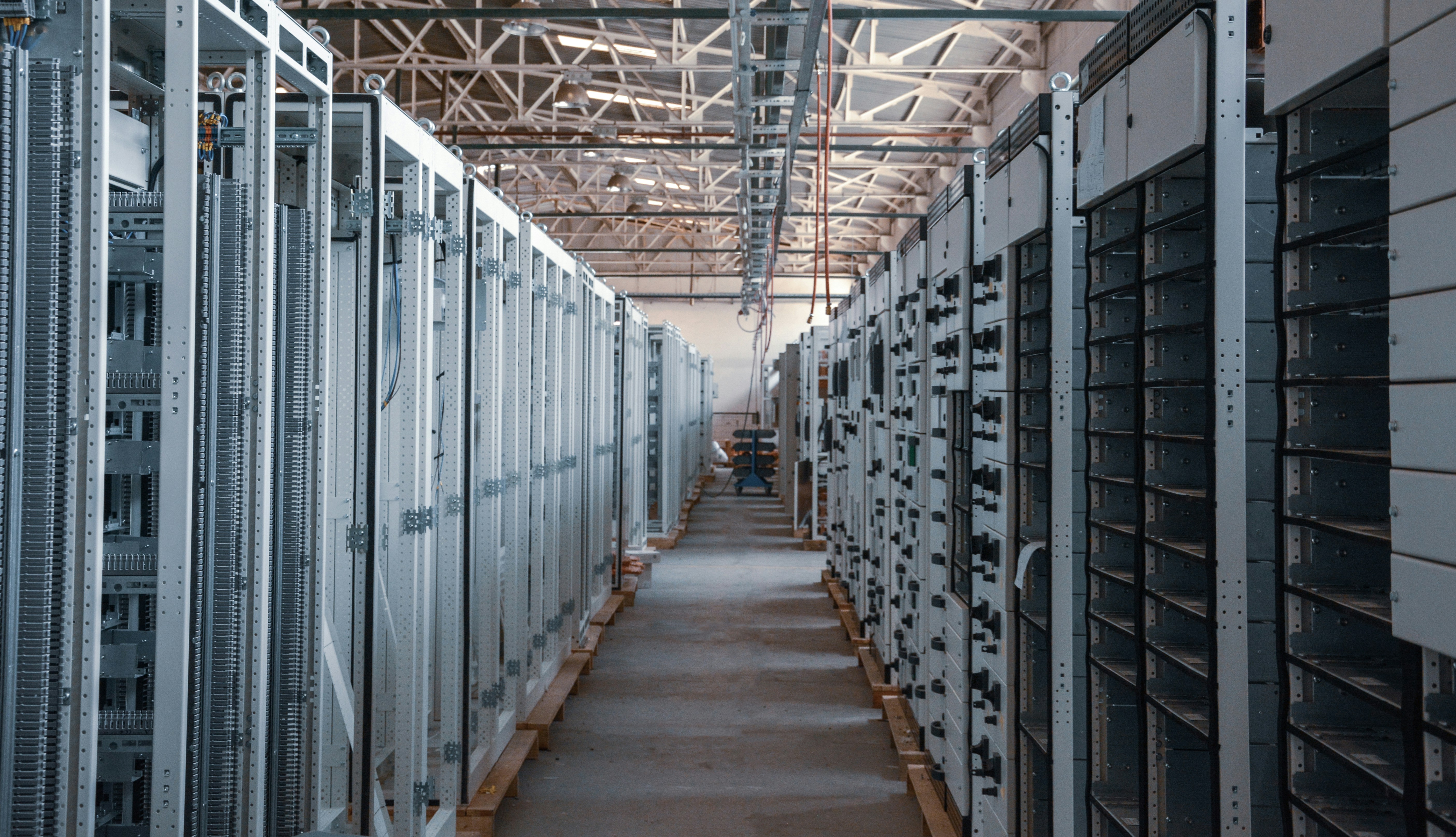
Microsoft has one of the most complete positions in the artificial intelligence economy. It owns a global cloud platform, sells enterprise software, distributes AI assistants, develops models and invests in specialized chips. Yet a November 2025 SemiAnalysis report argues that the company also made a costly strategic mistake: slowing its data-center expansion just as demand for accelerated computing was accelerating. The resulting story is not simply about lost GPU capacity. It is about how an incumbent decides where to earn margins in a rapidly changing technology stack.
The original advantage: Microsoft and OpenAI
Microsoft invested in OpenAI before generative AI became a mass-market category and expanded that relationship following ChatGPT’s debut. SemiAnalysis describes a period of aggressive cloud construction and leasing in 2023 and 2024, when Microsoft sought to provide increasingly large training clusters. The relationship gave Azure a flagship customer and helped Microsoft bring AI capabilities into its own products. But concentrating so much capacity around one customer also created strategic and financial tradeoffs.

Visual overview of this article: four key ideas. Original editorial illustration, not quantitative evidence.
The Big Pause
SemiAnalysis argues that Microsoft sharply reduced new data-center commitments after mid-2024, including withdrawing from some nonbinding site discussions and slowing planned self-build capacity. Its report estimates that more than 3.5 gigawatts of capacity that could have been delivered by 2028 was affected. That is the publication’s modeled assessment, not a figure independently established by this article. The report’s thesis is that caution about capital intensity and customer concentration caused Microsoft to underestimate subsequent demand.
Why timing matters in AI infrastructure
A data center cannot be switched on merely because demand appears. Securing power, permitting sites, constructing buildings, procuring cooling equipment and integrating accelerator clusters all take time. If a cloud provider delays commitments, competitors may lock up the best locations and power allocations. SemiAnalysis argues that this opened opportunities for Oracle, CoreWeave and other infrastructure operators as OpenAI diversified its computing relationships.
From energy to tokens: the economic stack
The report organizes the AI industry into connected layers: chips and systems, infrastructure services, platform services, models and applications. Each layer carries different capital requirements, competitive pressures and potential margins. Electricity and hardware are inputs; usable model inference and completed customer work are outputs. The strategic question is where Microsoft can capture the most value while avoiding the cost of buying every input from a third party.
The cost of outsourcing capacity
SemiAnalysis contends that Microsoft’s renewed demand for compute pushed it toward leasing from neocloud operators and reselling that capacity through Azure services. Such arrangements can expand supply quickly, but they introduce another provider’s margin into the cost structure. Whether this is economically unattractive depends on utilization, contract terms, customer pricing and the value of adjacent Azure services. Faster access to capacity can still be worthwhile when the alternative is turning away high-value demand.
Was losing infrastructure contracts necessarily a mistake?
The report estimates that major OpenAI infrastructure commitments awarded elsewhere could represent very large gross-profit opportunities. Those projections rely on SemiAnalysis’s proprietary contract and total-cost models, and should not be treated as audited lost earnings. There is also a counterargument: lower-margin, capital-intensive GPU leasing can dilute returns and create customer concentration risk. Microsoft may rationally prefer higher-margin platform and application revenue, even if that means ceding some infrastructure volume. The unresolved issue is whether it ceded too much, too early.
Azure’s enterprise advantage—and its weakness
Microsoft has an enormous installed base of enterprise customers, a global cloud footprint and established procurement relationships. SemiAnalysis argues that Azure nevertheless lagged some specialist providers in the experience of deploying and operating AI clusters for fast-growing model companies. Its discussion of ClusterMAX testing points to shortcomings in managed cluster workflows and monitoring. Enterprise distribution is powerful, but a specialized AI customer still needs reliability, ease of use and rapid access to the right hardware.
The fungible fleet strategy
SemiAnalysis examines Microsoft’s effort to make computing capacity useful across locations and workloads. A geographically distributed fleet may be especially valuable for enterprises with data-residency, security and latency requirements. The report also discusses how older GPUs can remain economically productive after newer generations arrive. A processor’s technical life and economic life are not identical: the relevant test is whether the revenue and strategic value it produces exceed its ongoing costs and opportunity cost.
Maia, models and vertical integration
Microsoft’s ambition extends beyond renting Nvidia accelerators. It is developing Maia chips, building its own AI models and operating services such as Azure AI Foundry while continuing to work with OpenAI. SemiAnalysis suggests that deeper integration could reduce dependence on external suppliers and preserve more of the economics from delivering AI services. The tradeoff is execution complexity: competing simultaneously in chips, infrastructure, models and applications requires exceptional coordination and capital discipline.
Copilot and the battle for the application layer
Microsoft’s strongest distribution assets remain products such as Microsoft 365, GitHub and enterprise workflow software. If customers adopt AI agents that perform work across applications, however, the value of traditional software interfaces may change. Microsoft could benefit by embedding agents into its installed base—or face pressure from independent tools that operate across multiple vendors. This connects the report to SemiAnalysis’s separate argument that coding agents may reshape the economics of software.
What investors and operators should watch
The most useful indicators are delivered accelerator capacity, utilization, realized pricing, return on invested capital, model-serving cost, enterprise adoption and the extent to which AI usage drives profitable demand for other Microsoft products. Reported capital expenditure alone is not enough. A large cluster that arrives late or operates at poor utilization can be less valuable than a smaller system with strong customer demand. Equally, an AI assistant with impressive usage may still have unattractive economics if inference costs exceed incremental revenue.
The strategic lesson
Microsoft’s situation illustrates the difficulty of making infrastructure commitments when both demand and technology are changing quickly. Invest too aggressively and capital returns may disappoint; invest too cautiously and competitors can capture scarce power, sites and customer contracts. SemiAnalysis makes a forceful case that Microsoft misjudged that balance. The longer-term outcome will depend on whether Azure can turn its distribution, engineering resources and vertically integrated portfolio into profitable AI services.
Update: the pause reversed
SemiAnalysis later reported in 2026 that Microsoft’s pause had reversed, with about 10 gigawatts of signed, binding data-center contracts year-to-date. Read the November 2025 analysis as a snapshot of that period rather than a permanent position.
How to interpret the evidence and recommendations
Evidence: Linked primary documentation describes standards, policies or reported study findings. A published benchmark is not a prediction for this business.
Interpretation: Recommended service scopes, checklists and implementation timelines are professional judgment; hypothetical calculations are examples, not actual client results.
Recommended next step: Establish a baseline using your own records, test the smallest practical improvement with an assigned owner and measure before scaling.
Sources
Related work
Explore related research in /blog and the original financial documentary in /theater . For AI production cost assumptions, see /aidanai/agentic-gtm-cost-planner .
Book a call
Need help evaluating or implementing the approach for your own business? Discuss a scoped assessment or engagement.
Keep reading
Related articles


Want help putting this into practice?
Discuss your next practical step in a short conversation.
Book a Call ↗
