AI Infrastructure & Economics
Google TPUv7 vs. Nvidia: The Economics of the AI Compute War
A look at SemiAnalysis’s TPUv7 report: Google Ironwood, Anthropic’s TPU strategy, Nvidia’s CUDA advantage and the cost economics of frontier AI infrastructure.
By Aidan McKnight · Insights
Automate
Book a call →

How this helps: See why differences in AI hardware, software ecosystems, and compute costs matter to the companies building and buying AI services.
TL;DR — Key takeaways
SemiAnalysis’s November 28, 2025 report argued that Google’s TPUv7 (Ironwood) is a credible alternative to Nvidia for frontier AI labs.
It described Anthropic’s roughly one-million-TPU arrangement: about 400,000 chips bought as racks via Broadcom (about $10 billion) and about 600,000 rented through Google Cloud (about $42 billion of remaining performance obligations).
Its model put Google’s all-in cost per TPUv7 roughly 44% below a comparable Nvidia GB200 system; these are analyst estimates, not company disclosures.
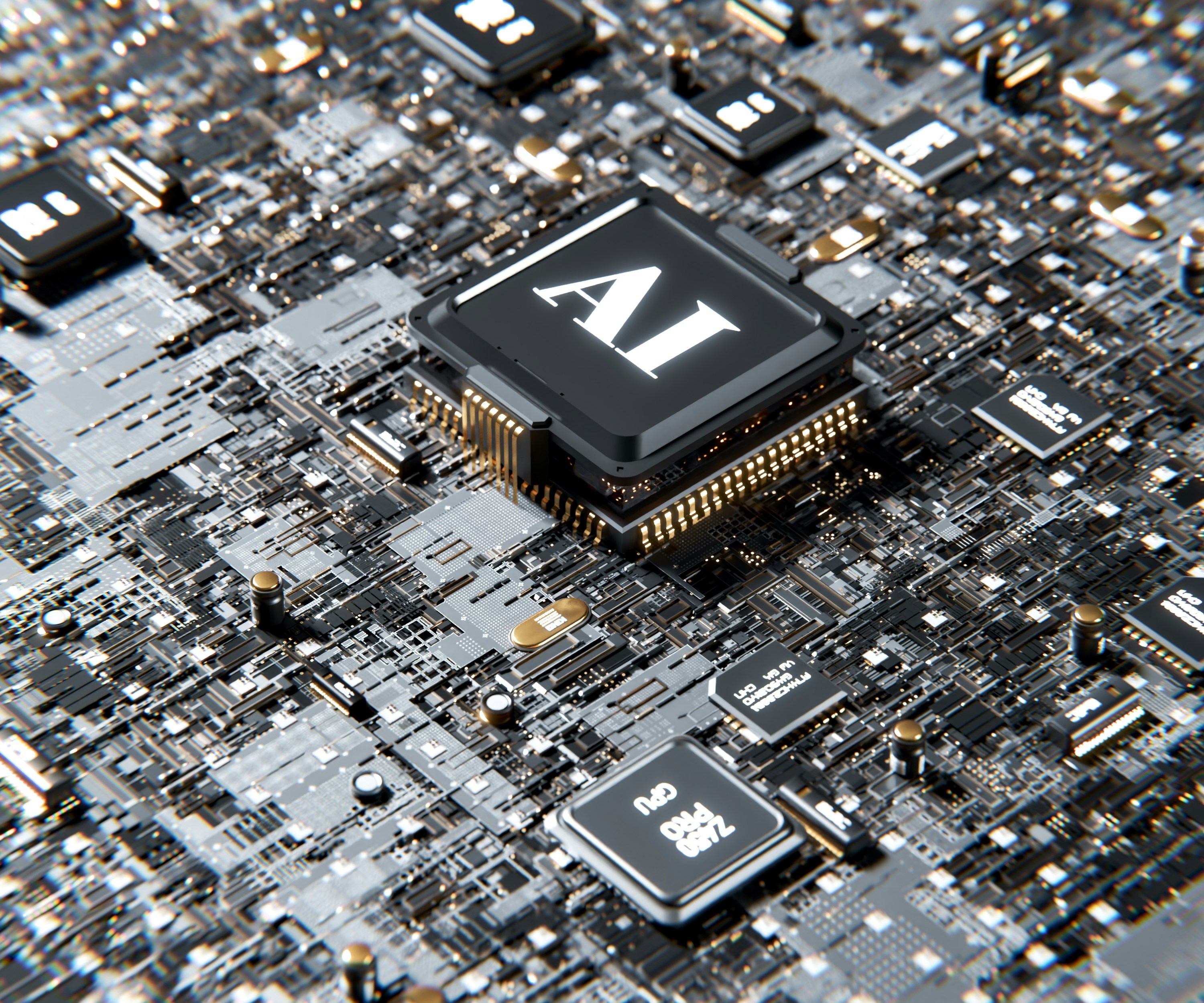
For years, Nvidia has occupied an extraordinarily valuable position in artificial intelligence: the default hardware and software platform for training and deploying leading models. Google’s seventh-generation Tensor Processing Unit, known as Ironwood, challenges the assumption that this dominance is permanent. In a November 2025 report, SemiAnalysis argued that Google’s TPU platform had become a credible alternative at the scale and performance levels that matter to frontier AI laboratories. The most important implication is not a simple contest of chip specifications. It is the emergence of competition over the total cost of useful computation.
Why Google’s TPU strategy matters now
Google developed TPUs to accelerate its own machine-learning workloads and has spent years refining the surrounding infrastructure. Historically, the platform was primarily an internal advantage or a cloud service. SemiAnalysis describes a strategic shift toward supplying TPU systems to external customers, potentially making Google a merchant competitor to Nvidia rather than only a buyer of its products. That changes the negotiating landscape for model developers and cloud providers.
Anthropic is central to the story
SemiAnalysis described an approximately one-million-TPU Anthropic arrangement, dividing its estimate between 400,000 Ironwood units purchased for deployment outside Google Cloud and 600,000 rented through Google Cloud. The report estimated about $10 billion for the purchased racks and roughly $42 billion in remaining performance obligations associated with the rental component. These detailed quantities and values are SemiAnalysis estimates, not independently audited contract terms. The strategic logic is clear even without treating the estimates as certain: access to multiple accelerator platforms can reduce dependence on any single supplier.

Visual overview of this article: four key ideas. Original editorial illustration, not quantitative evidence.
A cheaper chip is not necessarily cheaper compute
The right comparison is not peak FLOPs per accelerator. Training and inference economics depend on realized utilization, memory capacity, memory bandwidth, interconnect performance, software efficiency, electricity, cooling, downtime and capital cost. SemiAnalysis emphasizes performance per total cost of ownership, or TCO. A system that looks less powerful on a specification sheet may deliver more useful model computation per dollar if it sustains higher utilization or costs less to operate.
What SemiAnalysis estimated about Ironwood economics
The report modeled Google’s all-in cost per TPUv7 chip in a full configuration as approximately 44% below a comparable GB200 system and suggested that external TPU rental could remain meaningfully cheaper than Nvidia alternatives. It also estimated substantial savings in cost per effective training FLOP for an optimized Anthropic workload. These figures depend on proprietary assumptions about pricing, utilization and configuration. They should not be generalized to every customer or workload, and a change in assumptions can materially alter the comparison.
CUDA remains Nvidia’s strongest defense
Nvidia’s advantage is more than silicon. CUDA, optimized libraries, developer familiarity, tools and an extensive ecosystem reduce the effort required to get productive performance. Google’s TPU software environment can be less familiar to outside teams, and achieving excellent utilization may require specialized compiler and systems expertise. SemiAnalysis argues that Anthropic has the engineering depth to optimize the platform. That is not the same as saying a smaller developer can switch hardware without friction.
Systems matter more than individual processors
Ironwood is a rack-scale and pod-scale computing platform, not merely a chip. Google’s inter-chip interconnect and three-dimensional torus network are designed to move information efficiently across large collections of accelerators. The report discusses pods reaching 9,216 TPUs and the physical considerations involved in power delivery, cooling and networking. Those system choices affect the time required to train a model and the amount of hardware left idle while processors wait for data.
The leverage effect on Nvidia pricing
One of SemiAnalysis’s most provocative arguments is that the credible threat of using TPUs can change GPU purchasing economics before a customer deploys a single TPU. The authors estimate that competitive pressure helped OpenAI improve pricing on its Nvidia infrastructure. The exact magnitude is their analysis, not a publicly verified discount. The broader mechanism is familiar in procurement: when a buyer has a credible alternative supplier, the incumbent has less freedom to set prices.
Power, data centers and the new supply constraint
The report argues that electrical power and data-center delivery can constrain TPU deployments even when accelerator supply is improving. It also examines arrangements involving neocloud operators and former cryptocurrency-mining sites that already control power infrastructure. This underscores a crucial distinction: procuring chips does not create a working AI cluster without land, electricity, cooling, networking, construction and operational capacity. Infrastructure financing and contract duration can be as important as chip design.
Does this end Nvidia’s dominance?
Not necessarily. Nvidia retains major advantages in software, customer relationships, developer mindshare and a broad hardware ecosystem. Google faces its own challenges in commercialization, deployment and software accessibility. The more defensible conclusion is that AI accelerators are becoming a contested systems market. A successful alternative does not need to eliminate the incumbent to create meaningful value for customers and alter industry margins.
What AI infrastructure buyers should measure
A useful comparison should account for delivered model throughput, realized utilization, memory constraints, engineering effort, availability, service reliability and all-in cost over the expected life of the hardware. It should also include switching costs and the risk of being dependent on a single vendor. For model laboratories, this is a strategic procurement problem. For investors, it is a question about who captures the economic surplus as AI demand grows.
Update: the 2026 follow-up
In a 2026 follow-up using its InferenceX benchmarks, SemiAnalysis reported TPUv7 at about $0.181 per million tokens versus $0.222 on Nvidia’s B200 in one FP8 test, and said Anthropic’s TPU use could surpass Google DeepMind’s own by 2029. These are SemiAnalysis’s own tests, not independent benchmarks.
Source verification and definitions
Research estimates versus vendor claims: Compute cost-per-token and accelerator total-cost-of-ownership estimates vary with model, batch size, utilization, networking, power, depreciation, reservations and software environment. SemiAnalysis comparisons are analytical estimates under stated assumptions, not universal hardware price-performance rankings. Google’s and Nvidia’s vendor benchmarks should be identified as vendor-published results and verified against workload-specific deployment economics.
SemiAnalysis — Independent semiconductor and AI infrastructure research
How to interpret the evidence and recommendations
Evidence: Linked primary documentation describes standards, policies or reported study findings. A published benchmark is not a prediction for this business.
Interpretation: Recommended service scopes, checklists and implementation timelines are professional judgment; hypothetical calculations are examples, not actual client results.
Recommended next step: Establish a baseline using your own records, test the smallest practical improvement with an assigned owner and measure before scaling.
Sources
Related work
Explore related research in /blog and the original financial documentary in /theater . For AI production cost assumptions, see /aidanai/agentic-gtm-cost-planner .
Book a call
Need help evaluating or implementing the approach for your own business? Discuss a scoped assessment or engagement.
Keep reading
Related articles

Automate
Claude Code Is the Inflection Point: Why AI Agents Threaten the Traditional Software Business
Read article →

Automate
Anthropic Science: Can AI Compress Decades of Scientific Discovery Into Years?
Read article →

Automate
Microsoft’s AI Strategy: From Data Centers to Tokens—and the Cost of the Big Pause
Read article →
Want help putting this into practice?
Discuss your next practical step in a short conversation.
Book a Call ↗
